
Extremes of Heat and Cold

Working in Extreme Heat
Workers are often employed in environments, both inside and outside, that may involve exposures to both cold and heat. Understanding the health risks associated with workers in temperature extremes can help employers prepare and protect their workers. From heat stress (including heat cramps, heat exhaustion, and heat stroke) to cold stress (including frost bite, trench foot, chilblains, and hypothermia), workplaces don’t need to have “extreme” temperatures, as many may expect, to have adverse health consequences. For instance, while sun burn is thought to be a hot weather risk, sun burns can happen any time of year.
Heat Stress
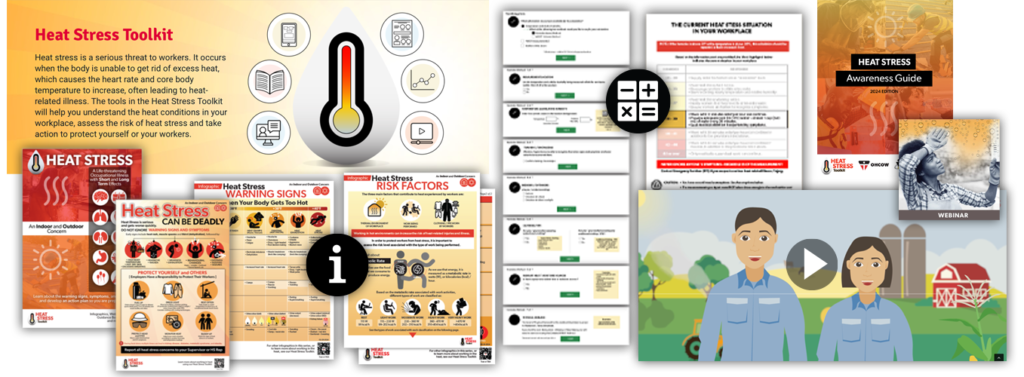
Heat stress occurs when the body cannot get rid of excess heat, resulting in the heart rate and core body temperature increasing. There is no single maximum safe temperature. Factors that impact the level of heat stress include air temperature, high relative humidity, radiant heat load (e.g., heat from the sun), direct contact with hot objects, and physical workload. Individuals can reduce their risks to heat stress by following adequate work and rest schedules, with rest ideally in shaded and cooled areas, along with access to cool water.
Types of heat stress:
- Heat rash: red clusters of pimples or small blisters. Treatment includes keeping the rash dry and moving the worker to a less hot, less humid area.
- Heat cramps: painful muscle cramps during or after exercise or sweating in high heat. Treatment includes removing the individual away from the heatsource and giving water or an electrolyte sports drink every 15 minutes.
- Heat syncope: sudden loss of consciousness (fainting) or dizziness when standing for a long time in a hot environment or when suddenly standing after sitting for too long. Treatment includes moving the worker to a cool area, and laying them down while encouraging them to have water or an electrolyte sports drink. Medical evaluation is advised to rule out the possibilities of heat stroke or other medical conditions.
- Heat exhaustion: common symptoms include headache, nausea, dizziness, weakness, decreased urine output, elevated body temperature, and heavy sweating. Caused by a loss in the body’s ability to cool down by sweating as a result of dehydration. Heat exhaustion can rapidly lead to heat stroke if left untreated. Remove from heat, give liquids, and get medical evaluation.
- Heat stroke: symptoms include confusion, loss of consciousness, seizures. Can occur with or without heavy sweating. Move the worker to a cool, shaded area, and follow medical advice while awaiting transportation to hospital. Incidents of suspected heat stroke should always be treated as a medical emergency.
Working in Extreme Cold
Cold Stress and Ergonomics of Working in Cold
Cold stress occurs when in extreme cold or work in cold environments. Risk of cold stress is based on three factors: air temperature, air movement (wind), and dampness (relative humidity). Workers should ideally wear clothing in layers so they can be added or removed when environmental conditions change or when their physical activity levels change. Sweating inside thick layers of clothing can increase the risk of cold stress. Strategically-planned work / rest schedules, with rest ideally in warmed areas protected from wind are important to reducing the risk of cold stress. Frequently drinking warm fluids can also help, but they ideally should not be caffeinated drinks which are diuretics (diuretics increase urine production and increase risk of dehydration).
Types of cold stress:
- Chilblains: red or purple patches of skin, usually on fingers, toes, cheeks, or ears. Patches are itchy, and can become swollen. Treatment includes slowly warming the skin, avoiding scratching, and seeking medical care for prescriptions to relieve itching and swelling.
- Trench foot (or immersion foot): reddening, leg cramps, swelling, tingling pain, may become gangrenous. This is a foot injury from prolonged exposure to cold and wet or moist conditions. Treatment includes removing wet socks, drying feet, and seeking medical care.
- Frost bite: numbness, tingling, stinging or aching fingers, toes, nose, cheeks, or any exposed body part. Skin may be pale or bluish, waxy if severe, caused by reduced blood flow to these areas. Mild frostbite can be treated by getting to warm room, immersing in warm (not hot) water. Do not rub areas, and do not walk if toes are impacted. If severe, may need medical care.
- Hypothermia is when the body loses heat faster than it can be produced.
- Early symptoms: shiver, tingling, possibly loss of coordination, progressing to confusion
- Severe symptoms: shivering stops, blue skin, slowed pulse and breathing. These symptoms are a medical
Tools and Resources
The Ergonomics of Snow Removal
Are you ready for winter: question & answer
Are you ready for winter: Working in the Cold & Ergonomics of Snow Removal (slides)
From Our Partners, et al.
Canadian Centre for Occupational Health and Safety (CCOHS)
POSTERS/INFOGRAPHICS
Working in the Heat
Heat-Related Illness: Watch for Signs
Keep Your Cool
Working in the Cold
Sun Safety in Canada
PUBLICATIONS
Working in Hot Environments: Health and Safety Guide
FACTSHEETS
Humidex Rating and Work
Cold Environments - General
Cold Environments - Health Effects and First Aid
Cold Environments - Working in the Cold
Hot Environments - Control Measures
Hot Environments - Health Effects and First Aid
Humidex Rating and Work
Temperature Conditions - Cold
Temperature Conditions - Hot
Temperature Conditions - Legislation
Government of Ontario
WEB PAGES
Working Outdoors
Managing Heat Stress at Work
Sun Safety at Work
What is Sun Safety
Sun Safety Programs
Resource Library
Occupational Health and Safety Council of Ontario (OHSCO)
TOOLKIT
Heat Stress Awareness Guide
Heat Stress Awareness Poster
Heat Stress Awareness Wheel Tool