
How to Use the Fresh Air Ventilation tool
It is important to have adequate fresh or outdoor air in an indoor environment to prevent symptoms like tiredness, fatigue, and headache which are commonly found in inadequately ventilated indoor or office environments. Introduction of fresh air in an indoor environment also helps in preventing the spread of bioaerosols (virus and bacteria), according to many scientific studies. Lack of fresh air can also affect the cognitive function of occupants, especially in educational facilities. There are different ventilation rates mentioned in the scientific literature to provide adequate amount of fresh air. However, this tool is based on the most widely used and accepted standard called ASHRAE 62.1-2026. The calculation is based on three factors namely the type of area, the number of occupants, and the size of an area. To make it simple, OHCOW has developed an excel based tool to calculate the required amount of fresh air in an indoor environment based on ASHRAE 62.1-2025 standard.
Step 1
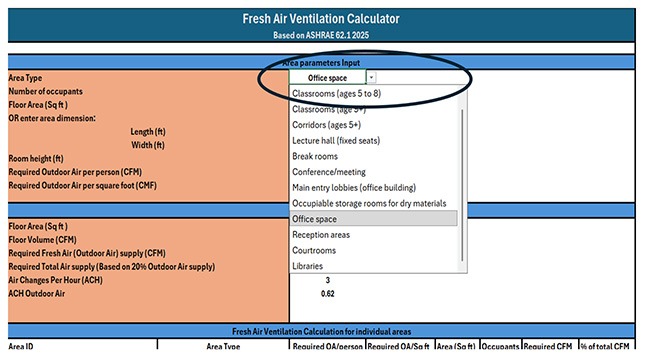
Choose the type of area from the drop-down menu. If you can not find the exact type, then choose the closest type.
Step 2
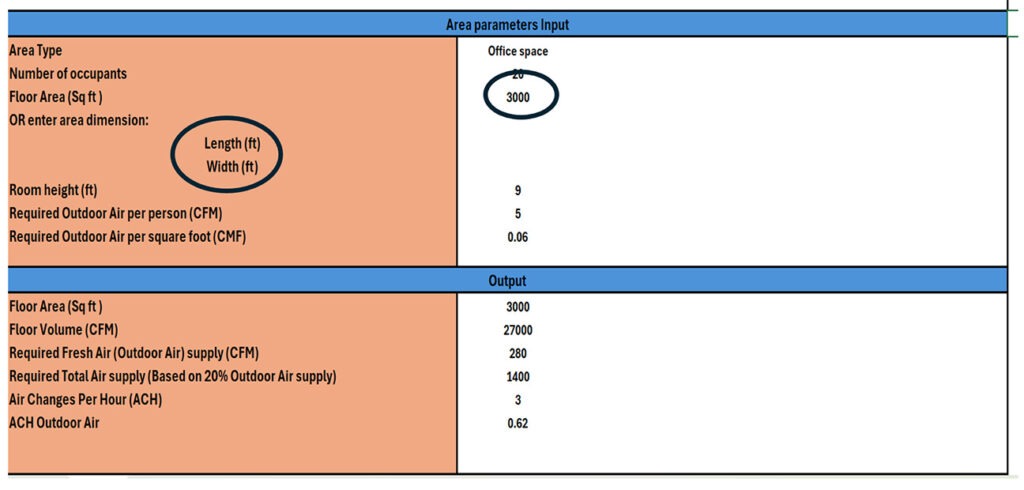
Input the total square footage of an area or enter the dimensions in feet.
Step 3
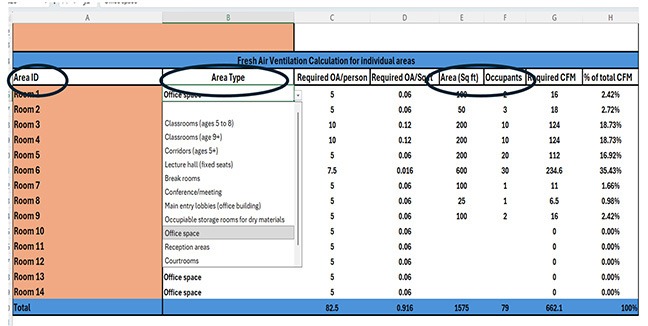
If you are interested in calculating the fresh air ventilation for individual rooms or areas, then use the input area for individual spaces at the bottom of the excel spread sheet. Identify the area, select the type of area, input the room dimensions, and the number of occupants in each spaces.
Indoor Air Quality (IAQ) criteria
Unfortunately, there are no regulatory exposure limits to control IAQ parameters. However, there are various standards and guidelines to provide thermal comfort and avoid adverse health effects related to building material off gassings or chemicals present in the environment. Choosing a particular standard can be difficult for a building occupant or employees responsible for maintaining the office air quality, it requires professional expertise. OHCOW hygienist reviewed a novel approach taken by European Energy Performance for Building Directive (EPBD) to rate the quality of the IAQ parameters rather than using limits to define the quality of air. The OHCOW Hygienist agreed with the approach and added a few more criteria from different guidelines. There are four quality levels in this criteria and each level is colour coded (green=good and red=bad, yellow and orange in between).



Comments are closed.