
Self-care is the ability of individuals, families and communities to promote health, prevent disease, maintain health, and cope with illness and disability with or without the support of a healthcare provider – World Health Organization.

- This event has passed.
Self Care Day
July 24
Taking Care of the Whole Self

Self Care at Work
Self Care is paying attention to physical and mental health, as well as environmental and emotional factors that may sometimes be neglected in the course of busy lives. It can mean getting exercise, eating nutritious food, and taking breaks.
Career Professionals of Canada warns that “job demands can sometimes impact our well-being.” They promote strategies to prevent burnout, including setting boundaries, realistic expectations, self-compassion, taking breaks and stress management techniques. they offer coaching courses that promote self care, because such strategies benefit individuals and organizations as a whole.

From the CHMA: With the majority of Canadians working between 35–45 hours a week—roughly one-third of their livesi —self-care is essential in the workplace. Organizations that encourage employees to practice self-care have reduced turnover, increased employee engagement, enhanced creativity, and a more resilient workforce capable of navigating challenges effectively. CMHA’s Not Myself Today program helps employers and employees foster a safe and supportive wok culture while building greater understanding and awareness of mental health and reducing stigma.
An International Movement
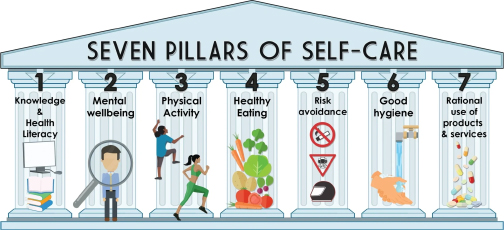
According to the International Self-Care Foundation, Self Care is comprised of pillars:
Pillar 1: Knowledge & Health Literacy
Pillar 2: Mental WellBeing
Pillar 3: Physical Activity
Pillar 4: Healthy Eating
Pillar 5: Risk Avoidance & Mitigation
Pillar 6 Good Hygiene
Pillar 7 Rational & Responsible use of Self-Care Products & Services